
Arabic keeps showing up in places people don’t expect. A business call with a partner in Dubai. A family gathering where half the conversation happens in a language you only half-follow. A verse of the Quran you’ve read in translation a dozen times but never quite in its own words. At some point, most people who’ve thought about learning Arabic land on the same question. Why learn Arabic, really, out of all the languages available?
The honest answer is that the reasons rarely stay in one lane. Some are practical — career doors that open, conversations that finally make sense. Others run deeper, tied to faith, family, or a curiosity about a part of the world that’s often misunderstood from the outside looking in. If you’re searching for reasons to learn Arabic and haven’t landed on the one that actually sticks, this list might do it. Here are eight, starting with what the language does to your mind before it ever leaves your mouth.
Why Learn Arabic? It Starts With Your Brain
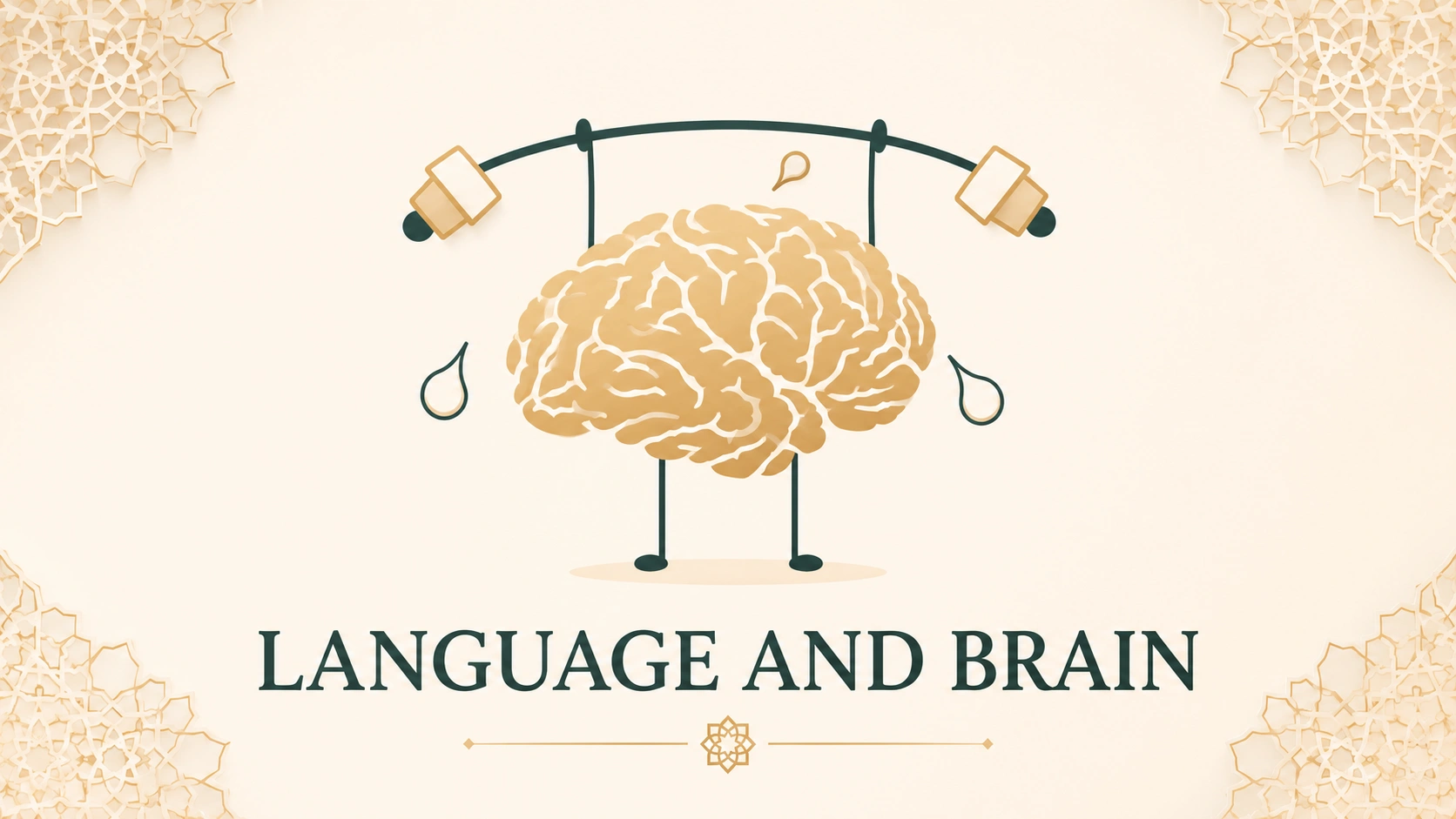
Learning a new language is like exercise for parts of your brain that don’t usually get much use. Every new word, every unfamiliar sound, works those muscles a little more. The payoff just shows up decades later instead of next week.
And the research backs it up — more than you’d expect. A UCLA study found bilingual Alzheimer’s patients showed symptoms about four years later, on average, than those who only spoke one language.
A larger review of 21 studies found something similar. Not every study agrees on the exact numbers. But there’s also reason to think bilingual stroke patients recover a bit better, too.
Arabic isn’t magic here. It’s just different enough from English, with a new script and new sounds, that your brain works harder learning it. That extra effort seems to be where the benefit comes from.
If you’re ready to put that effort to work, Arabic for Adults is built for exactly this kind of beginner-friendly start.
Learning Arabic Strengthens Your Memory
Ask anyone who’s already fluent for their reasons to learn Arabic, and memory improvement rarely makes the top of the list — but it probably should. Learning a new language directly impacts your memory. You improve your mental skills linked to problem-solving. As you learn more and more languages, your learning process becomes easier. Your mind discovers ways to integrate these languages and develops a relationship with them.
There’s also a compounding effect that catches people off guard. The first new language is the hardest — your brain hasn’t built the scaffolding yet. But once you’ve learned how to learn a language, the second one comes easier, and the third easier still. Arabic ends up being not just a language you picked up, but a skill you can reuse, a system your memory learns to lean on the next time you try something unfamiliar.
Learning Arabic Deepens Your Family Connections
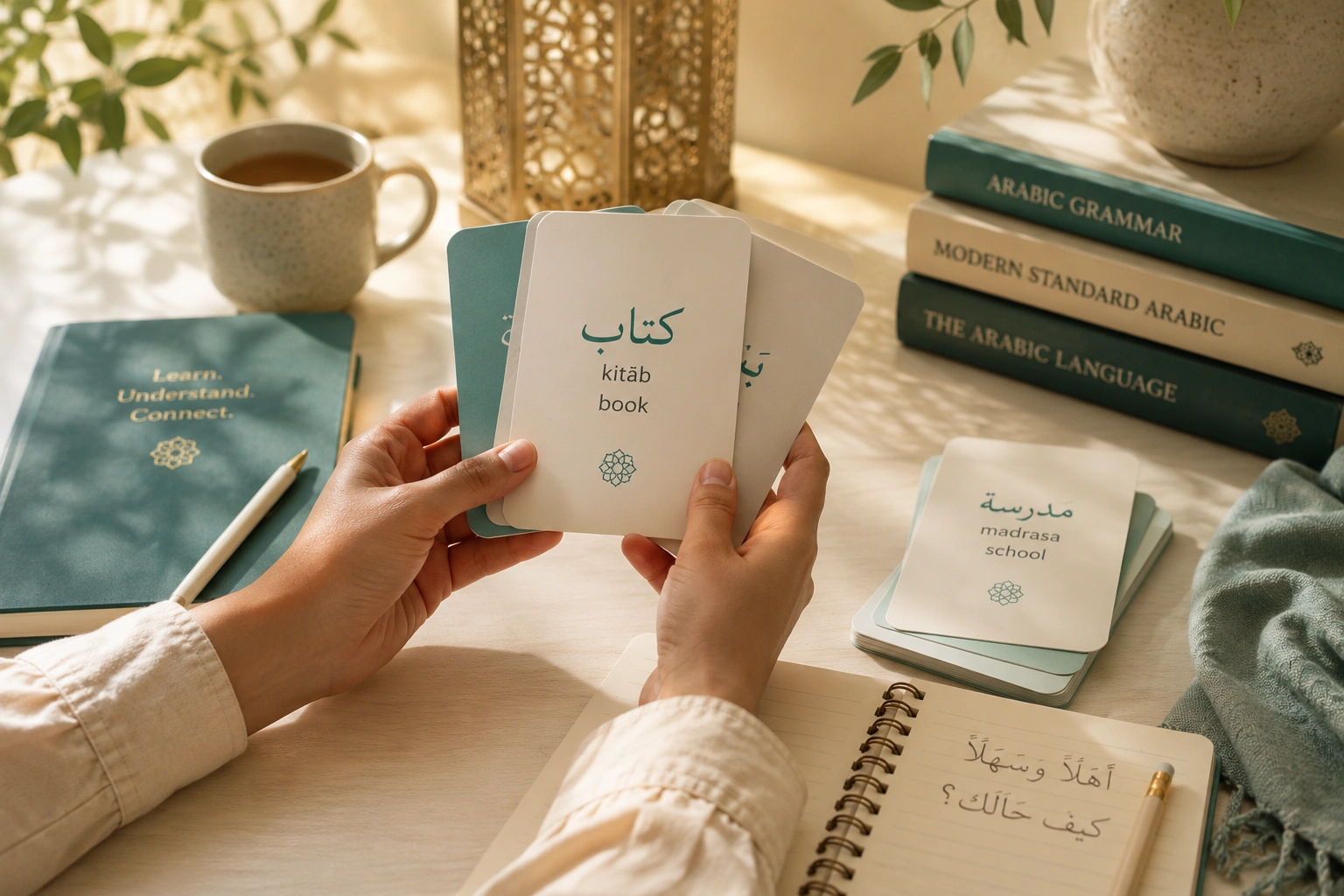
Ask people why learning Arabic actually matters to them personally, and family is where a lot of them land first.
There’s a particular kind of quiet that happens at family gatherings when everyone around you switches to Arabic. You’re left following tone and body language instead of actual words. It’s not anyone’s fault, exactly, but it adds up — a small distance that repeats at every holiday, every visit, every conversation between your parents that you catch only the edges of.
Learning Arabic closes that gap in a way that’s hard to replicate any other way. For many families, that connection runs through faith as much as language — parents who grew up reciting Quran, relatives who default to Arabic during religious conversations, a household where the two are woven together rather than separate.
Taking a course built around Quranic Arabic tends to open both doors at once: the language itself, and the religious context it’s usually spoken in. You stop translating in your head during family conversations, and you start actually being part of them.
That’s the gap Alif Arabic’s Quranic Arabic course is built to close — language and faith, learned together rather than separately.
Why Learn Arabic for Your Career? Here’s the Case
Arabic isn’t confined to one country or even one region — it’s an official language across more than twenty countries, spanning the Middle East and North Africa, which means the career value isn’t tied to a single market the way some languages are.
Business, diplomacy, journalism, translation work, humanitarian roles — Arabic shows up in fields that don’t obviously overlap with each other, which is part of what makes it useful rather than niche.
There’s a wrinkle worth knowing about going in: dialects shift significantly by region, and the Arabic spoken in Cairo isn’t quite the Arabic spoken in Riyadh or Beirut. That can feel confusing at first, especially for someone learning formally and then hearing something that sounds different in practice. It’s adaptable, though — a solid foundation in Modern Standard Arabic transfers across all of them, even if the accent takes some getting used to. Many employers tend to care less about which dialect you know best and more that you can function in the language at all.
For that kind of professional-grade foundation, Business Arabic is built specifically around real workplace use.

You Become Familiar With a New Culture.
Among all the reasons to learn Arabic, this one sneaks up on people the most. A language rarely travels alone. When you learn a new language, you open doors to a new culture. You become capable of relating to people living there and getting access to their cultural practices, arts, and food. Proverbs make way for an effective method to learn Arabic and receive insight into Arab history and culture.
Dialects add another layer here, too. Egyptian Arabic in particular carries an outsized cultural footprint — it’s the dialect most Arabic speakers across the region understand, largely thanks to decades of Egyptian film, television, and music. Learning it doesn’t just teach you a regional variant; it opens up an entire media landscape that most standard courses don’t touch.
If Egyptian culture and dialect specifically are the draw, Alif Arabic’s Egyptian Arabic course is built around exactly that.

Arabic Makes Travel Easier Across the Region.
If you needed one more reason to learn Arabic before a trip, this might be it. There’s a specific kind of relief that comes from not having to point at a menu or fumble through a translation app mid-conversation. Knowing even conversational Arabic changes the texture of travel through the region — asking for directions, ordering food, negotiating a price, none of it carries the same low-grade anxiety it does when you’re relying entirely on gestures and hope.
It also does something less obvious: it gives you a reason to actually use what you’ve been studying. Vocabulary that’s sat passively in a notebook for months suddenly has somewhere to go.
A trip becomes practice with real stakes. This tends to cement the language faster than another few weeks of drills would. And the version of a place you get to see shifts too. Fewer tourist-only interactions, more of the ordinary, unscripted moments that don’t happen when everyone around you can tell you don’t speak the language.

You can understand the news in Arabic.
Here’s a reason to learn Arabic that rarely makes anyone’s initial list, but probably should. Every translation is also an interpretation, whether the translator means it to be or not.
Something gets lost, or reframed, or quietly left out — not usually out of bad intent, just because translation is imperfect and editorial choices happen at every stage. This can matter especially in regions where translated coverage often leaves out nuance. Western coverage of the Middle East has a long history of missing context that local reporting simply carries by default.
Reading or listening to Arabic news directly closes that gap. You’re not getting someone else’s summary of the story anymore — you’re getting a more direct version of the story, with all the nuance that usually doesn’t survive translation.
Reading is where this starts — Arabic Reading Course builds exactly that skill from the ground up.

One More Reason to Learn Arabic: The Friendships
Arab hospitality has a reputation for a reason. Guests get treated like family almost on arrival. And that generosity tends to run deep rather than staying surface-level — the kind of warmth that shows up in small, repeated gestures rather than one big impression. But there’s a difference between being welcomed as a guest and actually being let in. Language tends to be the thing that closes that distance.
Using Arabic in everyday conversation, even imperfectly, signals something to the people you’re speaking with. That you’re not just passing through, that the effort mattered enough to make. Friendships that start this way tend to have staying power. Not because Arabic is magic, but because showing up in someone else’s language, even clumsily, is its own kind of respect. That tends to be remembered long after the vocabulary gets a little rusty.

Conclusion
Arabic rarely stays one thing for long. A career asset one day, a way back into family conversations the next, the language a favorite verse was actually written in. Eight reasons, and still not the full list. If you came here still asking why learn Arabic, hopefully at least one of these landed. What matters more than which reason pulled you in is simply starting.
Wherever you’re beginning, Alif Arabic has a course built for it. Quranic Arabic and Quran for Adults for faith-centered learning, Modern Standard Arabic and Arabic for Adults for a strong general foundation, Business Arabic for career use, Arabic Reading Course for literacy, and Egyptian Arabic for dialect and culture. Check it all here.


