
Picture this. You’ve been studying Arabic for a month. You meet an Egyptian friend and say “How are you?” exactly the way your textbook taught you. She laughs. Kindly, but she laughs. Annoying, right? And it makes you wonder what the point of Modern Standard Arabic is if nobody talks like that.
There is a point. MSA Arabic just does a different job than the one you assumed. So where does MSA actually show up? Where doesn’t it? And what does any of it have to do with the Quran?
Modern Standard Arabic in the News and on Official Paperwork
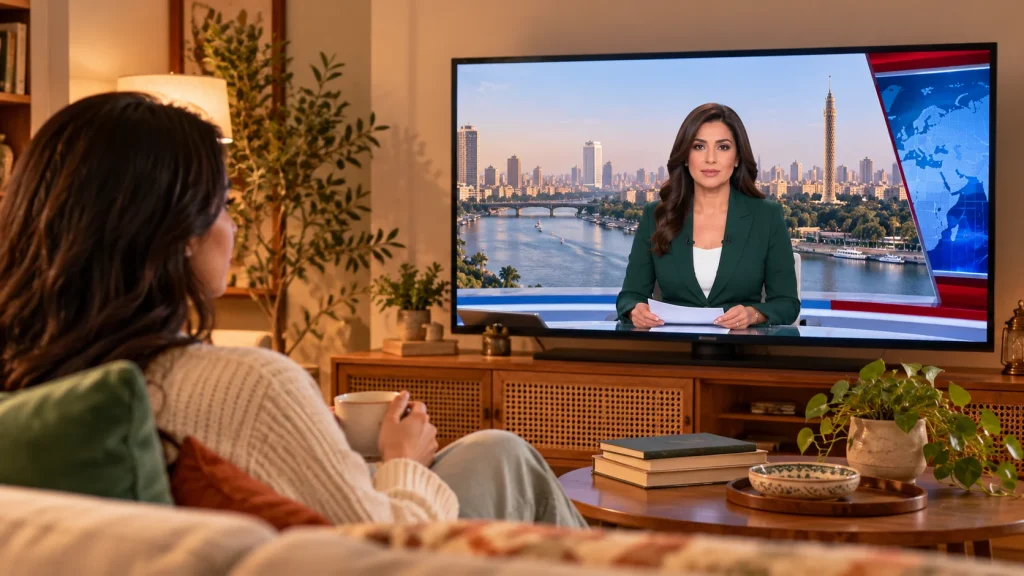
Turn on Al Jazeera. That’s Modern Standard Arabic. The presenter isn’t talking the way she talks to her mum. She’s using one shared version of Arabic so that a viewer in Morocco and a viewer in Oman both get it, and that’s the whole idea.
Newspapers use it. School textbooks use it. Court papers, government announcements, the contract your landlord in Amman puts in front of you. Same thing. Arabic is also one of the six official languages at the United Nations, and the Arabic spoken in that room is this one.
So if you want to get better at it, go and listen to the news. Seriously. We wrote about why listening matters so much when learning Arabic, and it applies here more than anywhere.
You’ll also need stuff to read and watch, and these apps and sources for learning Arabic are a fair place to start. Most of them lean on the standard form. The grammar behind it is mostly the same system we cover in grammar in Arabic, so none of your study time is wasted.
If reading Arabic news and formal writing without constantly reaching for a dictionary is your goal, Alif Arabic’s Modern Standard Arabic course was made for that, so take a look.
Why Modern Standard Arabic Almost Never Shows Up at the Dinner Table
MSA is generally not the everyday home language for most people. A kid in Alexandria learns Egyptian Arabic from her parents. A kid in Beirut learns Levantine. They both meet the formal version at school, and it feels a bit different from everyday dialect.
So when you use Fusha Arabic with a shopkeeper, you’ll be understood. You’ll also sound a little like you’re reading out a speech. Using MSA in casual conversation can sound formal or bookish, similar to using very formal English in an everyday chat. Then he’ll answer in dialect. That stings the first few times; I won’t pretend otherwise.
This split is old, by the way. Ibn Khaldun wrote about it in the Muqaddimah back in the 14th century. He noticed that the everyday speech of his time had moved away from the older language kept in the Quran and Hadith. So people have been juggling two kinds of Arabic for a very long time.
Greetings are where you’ll feel it first. How to say hello in Arabic shows you the formal and the everyday side by side. Then try basic Arabic phrases every learner should know, and learn thank you in Arabic too, because you’ll say it all the time.
How Fusha Arabic Opens the Door to the Quran
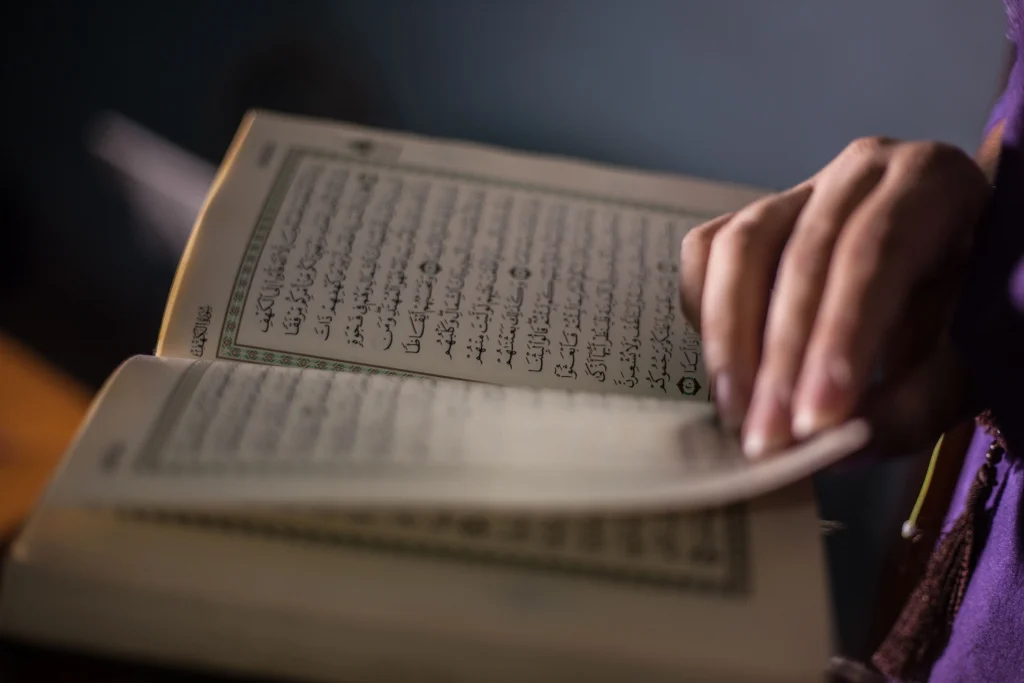
Fusha is the word you’ll hear for formal Arabic, and it covers two things: Classical Arabic and Modern Standard Arabic. The Arabic of the Quran sits inside the classical side. MSA grew out of it, and it was shaped to handle things like news, schools, and official communication.
Allah calls the Quran an Arabic Quran, sent down so that people might understand (Surah Yusuf, 12:2). Understand. Not just recite. That’s the point of learning Arabic for the Quran in the first place.
Ibn Taymiyyah says something close to this in Iqtida al-Sirat al-Mustaqim. His view was that Arabic is part of the religion in a practical sense, since you can’t properly understand the Quran and the Sunnah without it.
Now, I’m not going to tell you modern Arabic will unlock the Quran by itself. It won’t. Some Quranic words are rarely used today, a few mean something different now, and some sentences will look strange.
Here’s the good news: the alphabet, the roots, and much of the grammar come with you. Starting from MSA can make the Quran feel more approachable. You’ll still have to study Quranic vocabulary and grammar properly, though, so think of it as a good base rather than the whole thing.
Wondering which route to take? Can you learn Arabic from the Quran? tackles it from the other side. Learning Arabic to understand the Quran is a good starting point if worship is your reason. And learning Quranic Arabic online shows what the dedicated path looks like.
Once you’ve got a modern Arabic base and you want the Quran in your salah to start making sense, the Quranic Arabic course at Alif Arabic is the logical next step.
Choosing Modern Standard Arabic First (or Letting It Wait)
So, should you start here? It depends on what you want. Reading, Islamic studies, formal work, the Quran? Then yes, Modern Standard Arabic in its standard form makes sense as your first layer. Want to chat with your in-laws in Alexandria? A dialect gets you there faster, and MSA can wait.
You’ll hear about people who do one and then the other: MSA for reading and grammar, then a dialect once the sounds stop feeling foreign. Some do it backwards, and honestly that’s fine. If you’re tempted to study both at the same time, you can. It just helps to know what you want from each and to keep your books and apps from getting tangled.
Not sure where to begin? Arabic courses online and where to start lays out the options without pushing you. Arabic lessons for beginners online suit complete newcomers better. And before you sign up with any teacher, read how to choose an Arabic tutor.
What Nobody Tells You About Formal Arabic
It’s strange to study a language nobody uses to say goodnight. You learn it from a book, you hear it on the news, and for ages it feels like homework for a language that lives somewhere else.
Then one day you’re listening to a recitation or a lecture, and you realise you followed a whole sentence. No translating in your head. Just got it.
When does that happen? No idea, honestly. Progress varies widely depending on study time, prior language experience, and learning method. Nobody can tell you why. What you can do is choose what you read and listen to, and make sure it’s something you care about. So what would you love to understand without a translation next to it?
Anyone ready to build that foundation with a teacher walking them through the formal side can begin with the Modern Standard Arabic course at Alif Arabic.
Frequently Asked Questions
What does MSA stand for?
Modern Standard Arabic. People also call it fusha, though that word covers classical Arabic too. If a teacher says MSA, they mean the formal Arabic of media, writing, and school.
Is it normal that people answer me in dialect?
Totally. Almost everyone goes through it. They understand you fine, but dialect is just what comes out in casual chat. It stings a bit at first. Learning a few dialect phrases helps a lot.
Can I understand the Quran with modern Arabic?
Partly. The alphabet, roots, and a good chunk of grammar carry over, so you’re ahead of where you started. But Quranic vocabulary has its own layer and needs its own study. MSA is the base, not the finish line.
Should I learn MSA or a dialect first?
Depends on your goal. Reading, Islamic studies, or formal work? MSA. Talking to family and friends? A dialect gets you speaking sooner. Many people do one then the other, and there’s no single right order. The only real mistake is hopping between them every week, because then neither one ever sticks.


